
Conference and Exhibition
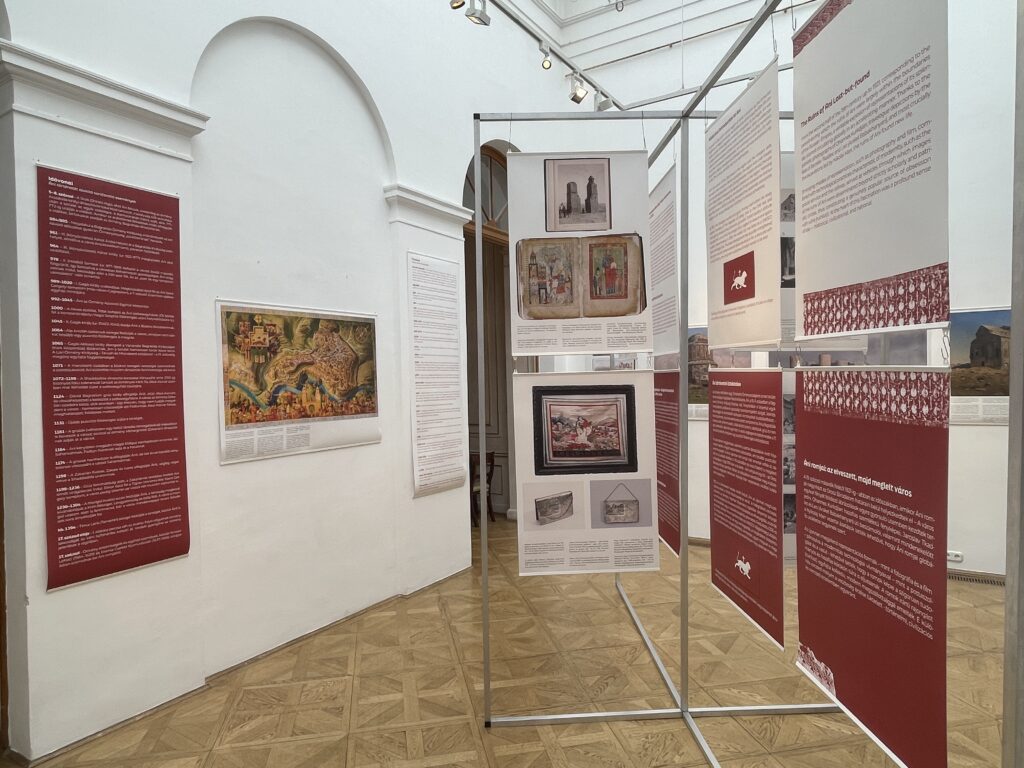
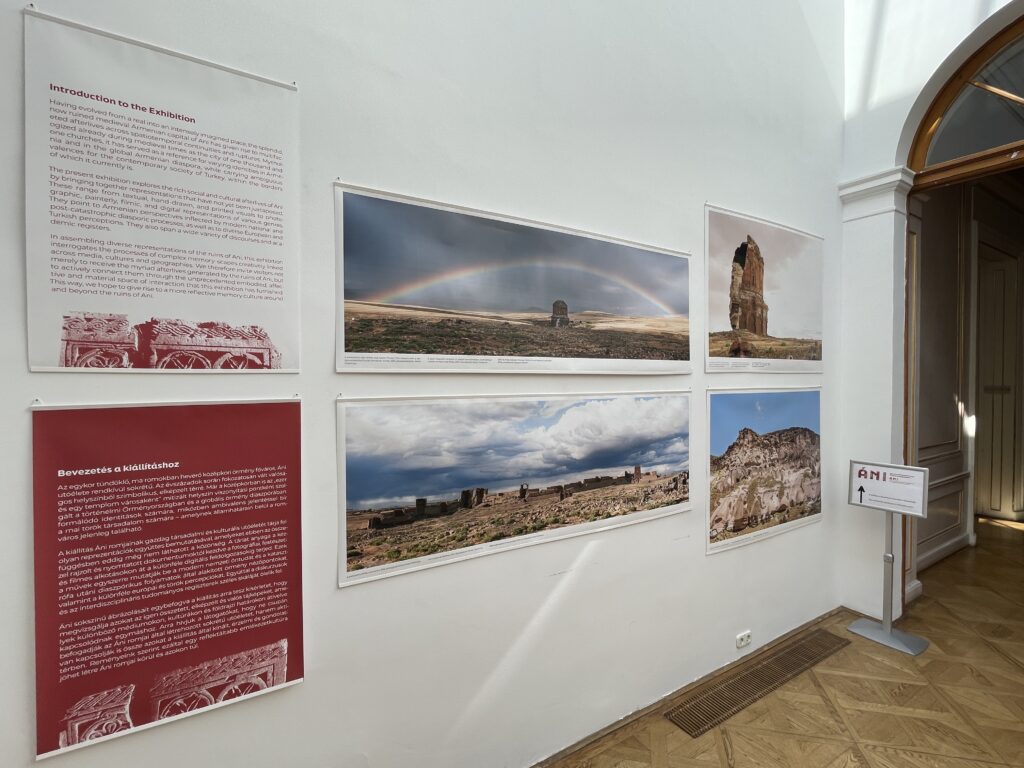
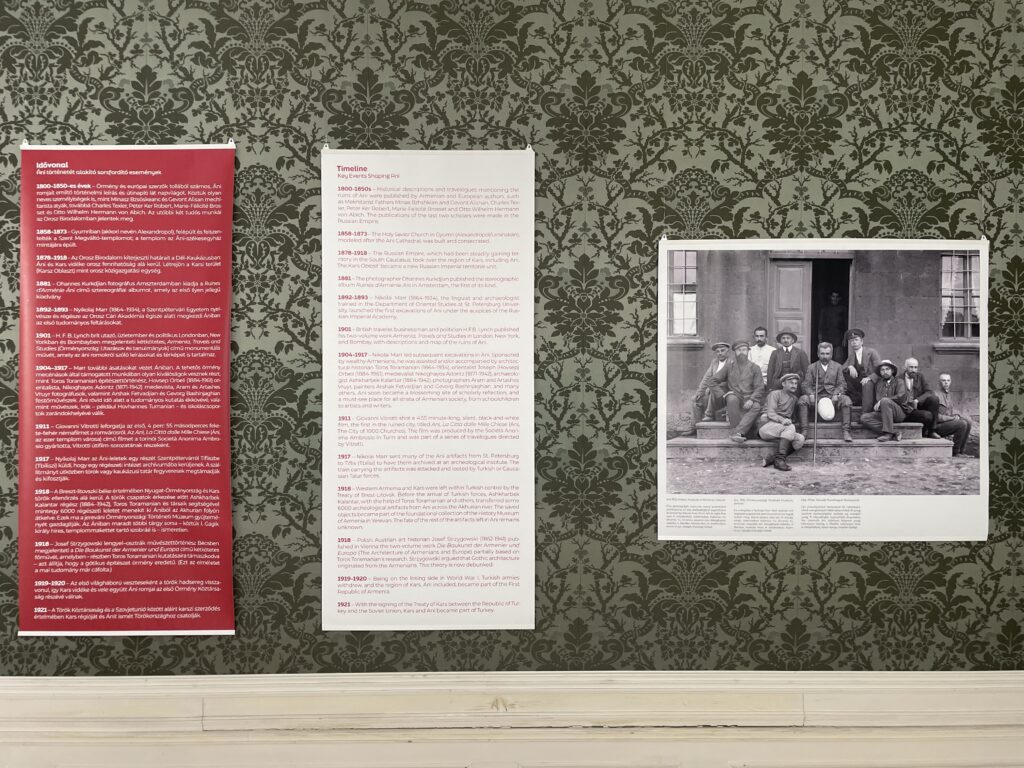
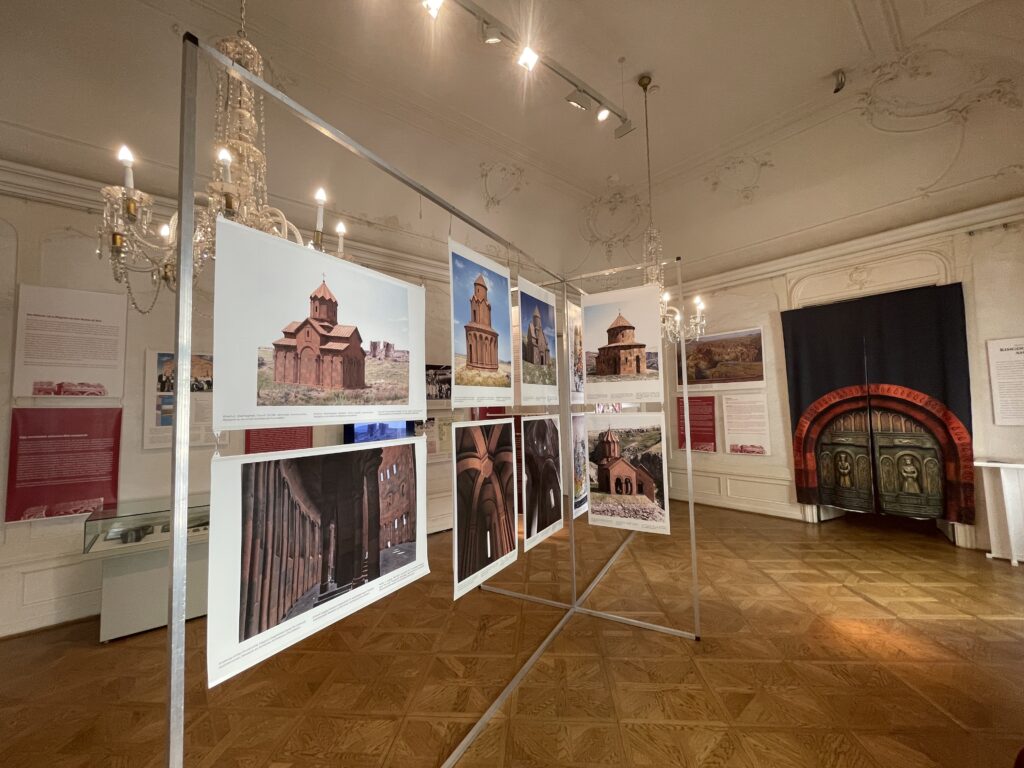
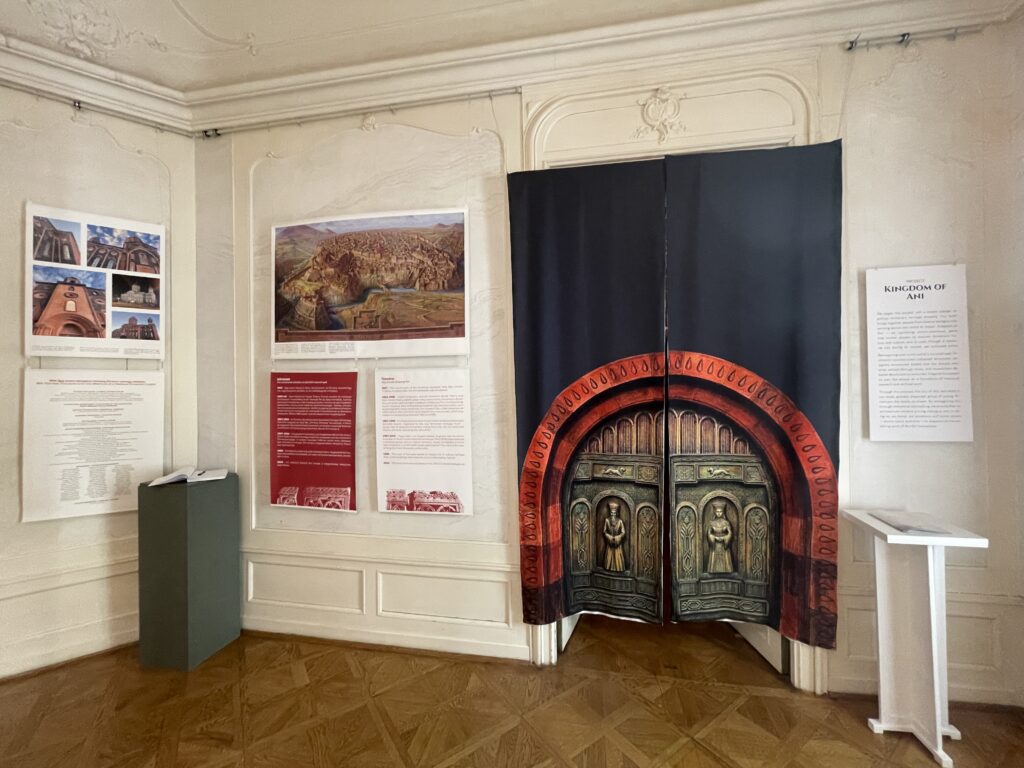
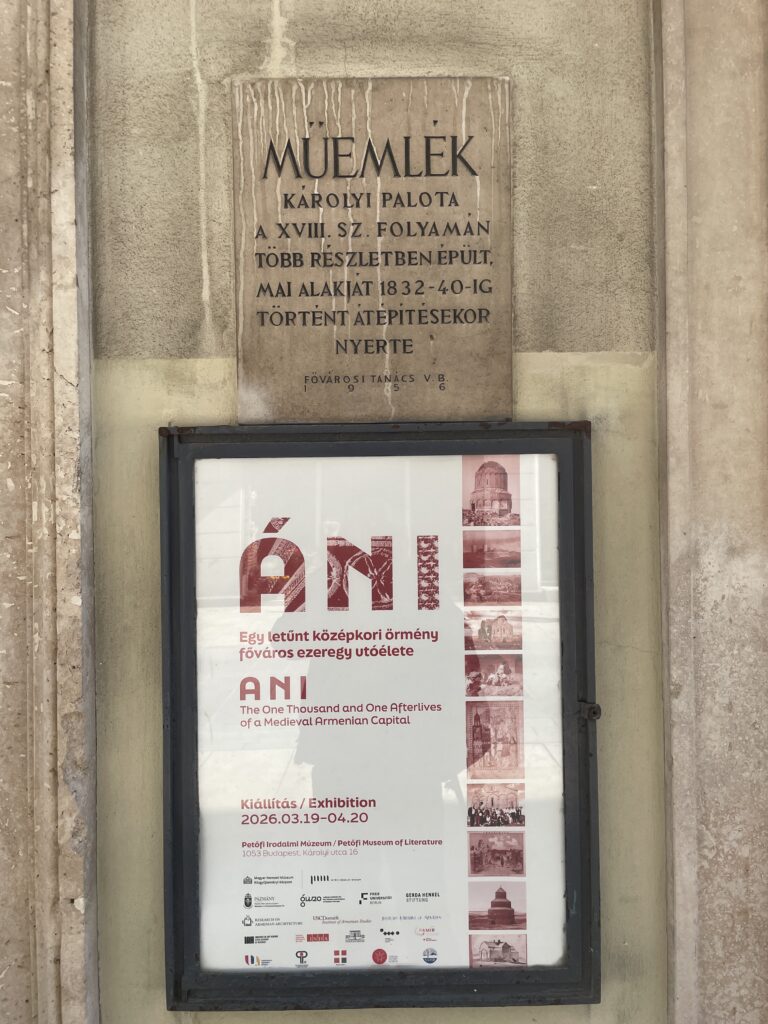
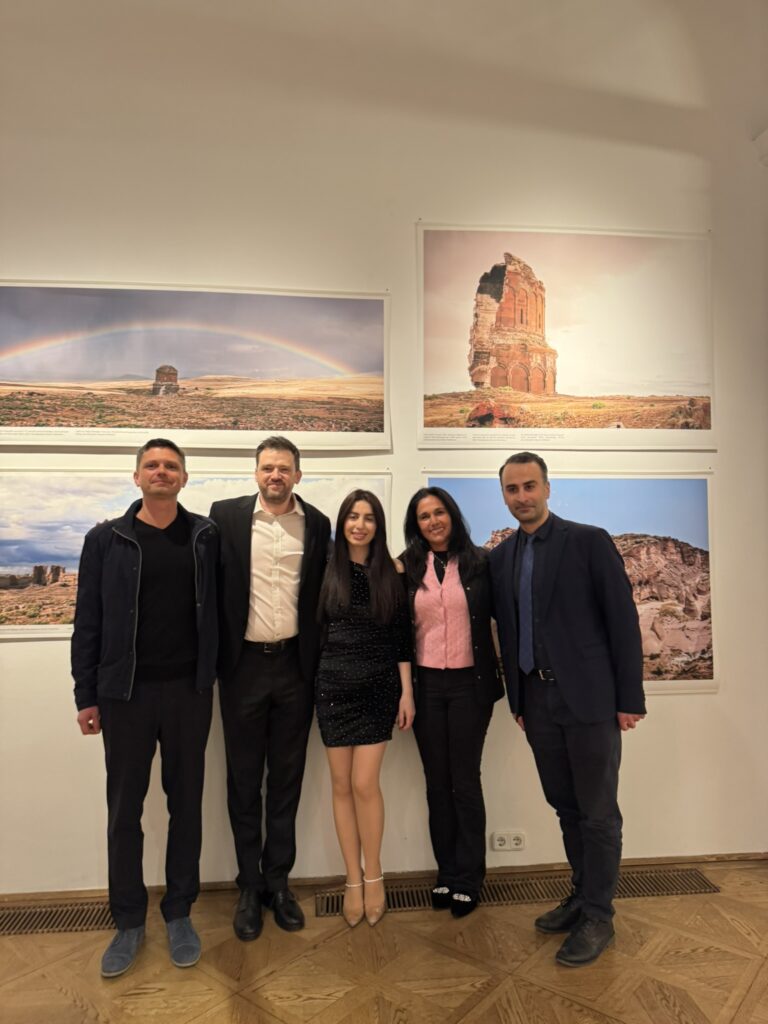
Separated by both distance and time — over 2,000 kilometers from the medieval Armenian capital of Ani and 981 years after its fall — Budapest became a site of renewed reflection on the city’s enduring memory. On March 19, 2026, the opening of the exhibition “Ani: The One Thousand and One Afterlives of a Medieval Armenian Capital” took place at the Petőfi Literary Museum in Budapest. Together with the conference “Towards a Reflective Memory Culture for the Lost City of Ani,” held on March 20–21, the exhibition marked the culmination of the two-and-a-half-year project “Lost-but-found: Armenian Capital Ani at the Contested Crossroads,” funded by the Gerda Henkel Foundation within the framework of its “Lost Cities” programme. The project was realized through the collaboration of the Pázmány Péter Catholic University, particularly its Department of Armenian Studies, the Leibniz Institute for the History and Culture of Eastern Europe (GWZO) in Leipzig, and the Free University of Berlin’s Institute of Ottoman and Turkish Studies, in cooperation with the Petőfi Museum of Literature. The exhibition featured works by professional photographers, books and journals dedicated to Ani, and even stones brought from the city. A separate room showcased the video game Kingdom of Ani.
At the opening of the exhibition, several distinguished guests delivered welcoming remarks. Petra Török, Director General of the museum, greeted the audience by quoting Sándor Kányádi’s poem “Armenian Gravestones,” reflecting on the presence of Armenians in Transylvania as represented in Hungarian poetry. Nándor Birher, Dean of the Faculty of Humanities and Social Sciences at PPCU, emphasized the continuity of Armenian-related exhibitions in Budapest, noting that this event represents the latest stage in a longer institutional engagement with Armenian history and culture. Sándor Őze, Head of the Institute of History at PPCU, Director of Hankiss Ágnes Institute, also addressed the audience, highlighting connections between Armenians and Hungary.
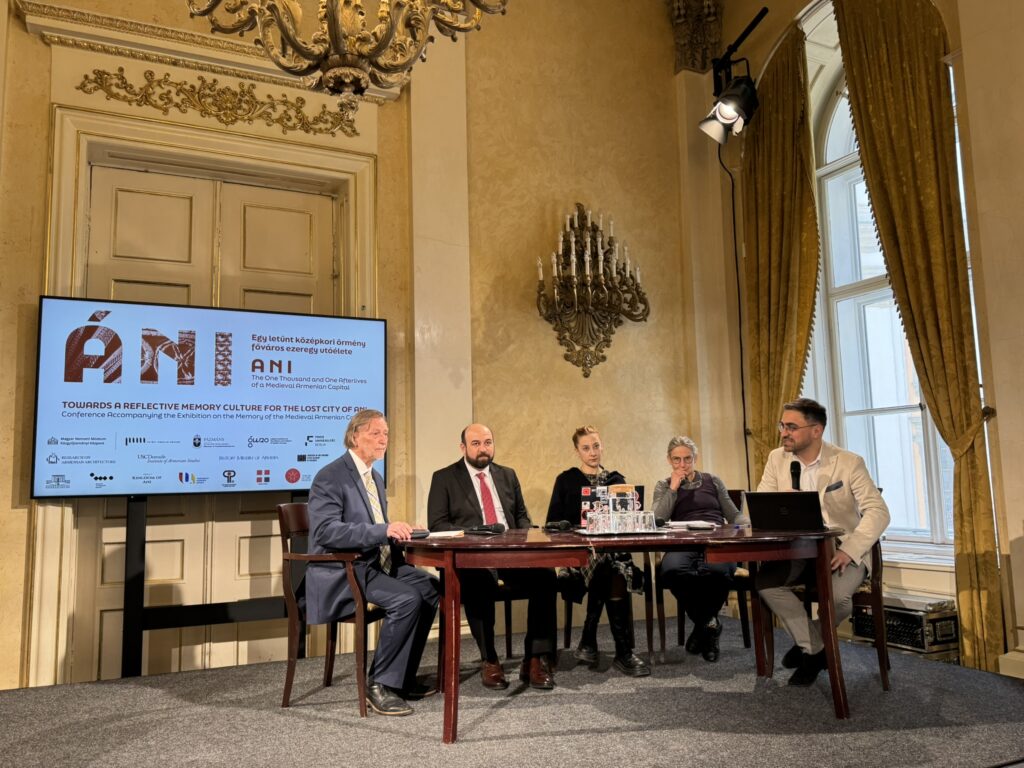
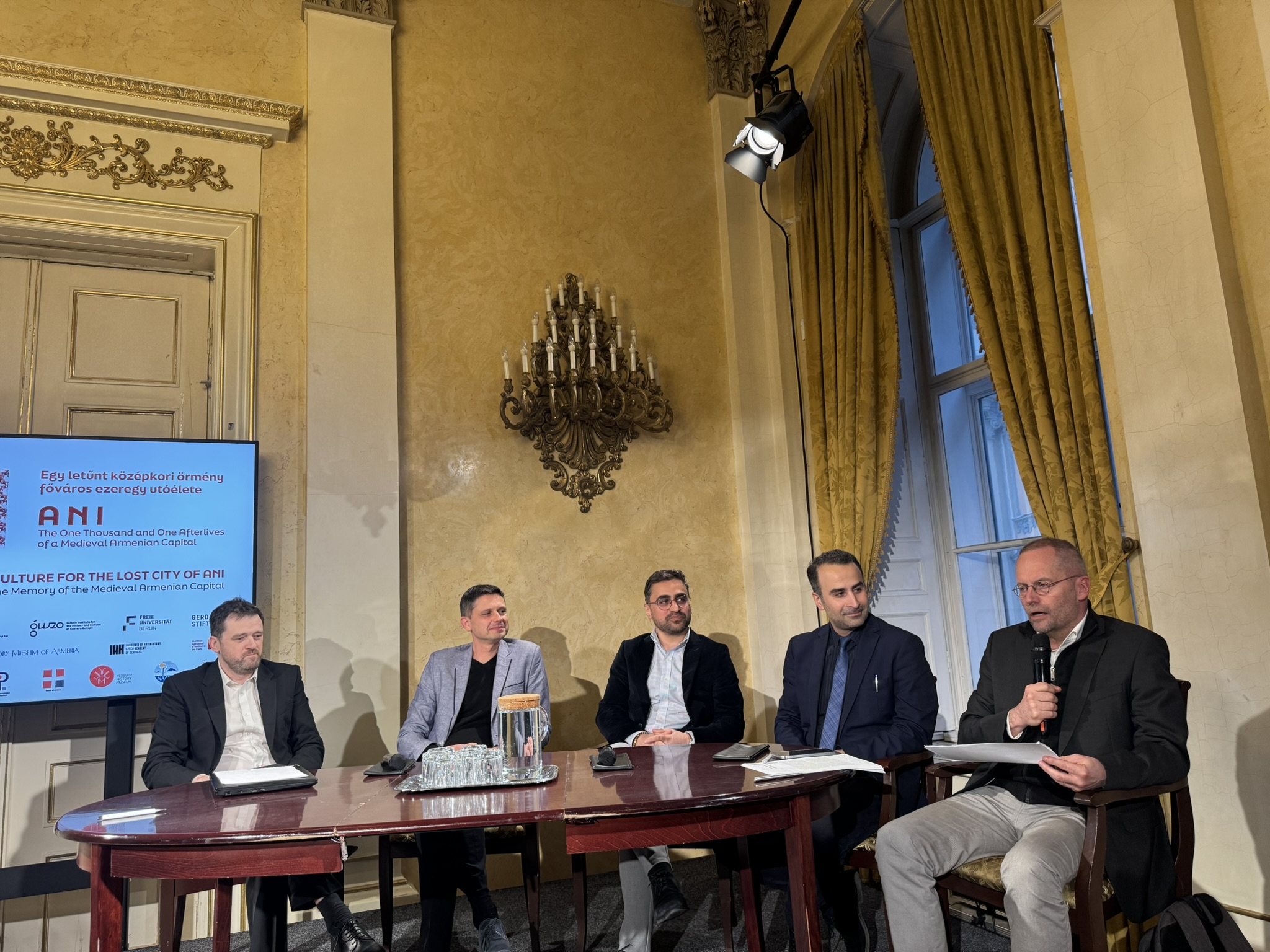
Among the invited speakers, Davit Poghosyan, Director of the History Museum of Armenia in Yerevan, reflected on the symbolic significance of Ani as a representation of Armenian statehood, faith, and identity. Vahe Torosyan, Deputy Scientific Director of the Mesrop Mashtots Institute of Ancient Manuscripts—the Matenadaran—expressed his appreciation for the project, stating: “What was lost, but rediscovered, can never be lost again.” Bálint Kovács, Head of the Department of Armenian Studies at PPCU and Senior Research Fellow at GWZO Leipzig, concluded the opening remarks by invoking the ideas of Michel Foucault, emphasizing that the past is shaped through its interpretation, with Ani serving as a particularly sensitive example. Karen Jallatyan, Lecturer at Pázmány Péter Catholic University’s Department of Armenian Studies and Postdoctoral Researcher at the Leibniz Institute for the History and Culture of Eastern Europe, and Konrad Siekierski, Research Fellow at Free University Berlin and lecturer at Pázmány Péter Catholic University’s Department of Armenian Studies , co-curators of the exhibition and co-organizers of the conference, highlighted the collaborative nature of the project, describing the exhibition as a unique and innovative outcome of more than two years of joint work. The opening ceremony concluded with a presentation by Elke Hartmann (Berlin), Chairholder at the Institute of Ottoman Studies and Turcology at Free University of Berlin and Chairperson and Associate Editor of the Houshamadyan project, who introduced the volume Capturing Eternity: Jerusalem Armenian Entanglements with Photography (L’Harmattan, Budapest and Leipzig University Press, 2026), edited by Karen Jallatyan and Diana Ghazaryan, PhD student at Pázmány Péter Catholic University, in collaboration with Bálint Kovács.The volume contains the catalogue of the 2024 Budapest exhibition together with a collection of scholarly reflections. The evening also included piano performances by Nare Sukiasyan from the Komitas State Conservatory of Yerevan and the intermedia work Sahman–Grenze–Kuş by the Berlin-based artist, choreographer, and sociologist Jasmin İhraç.
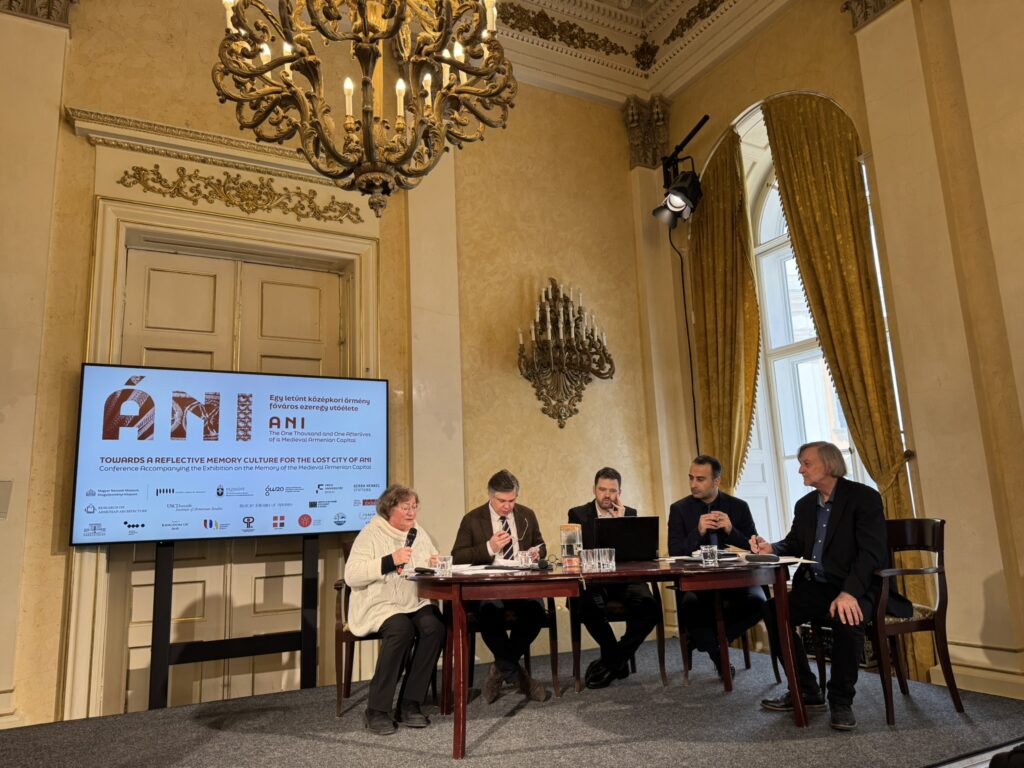
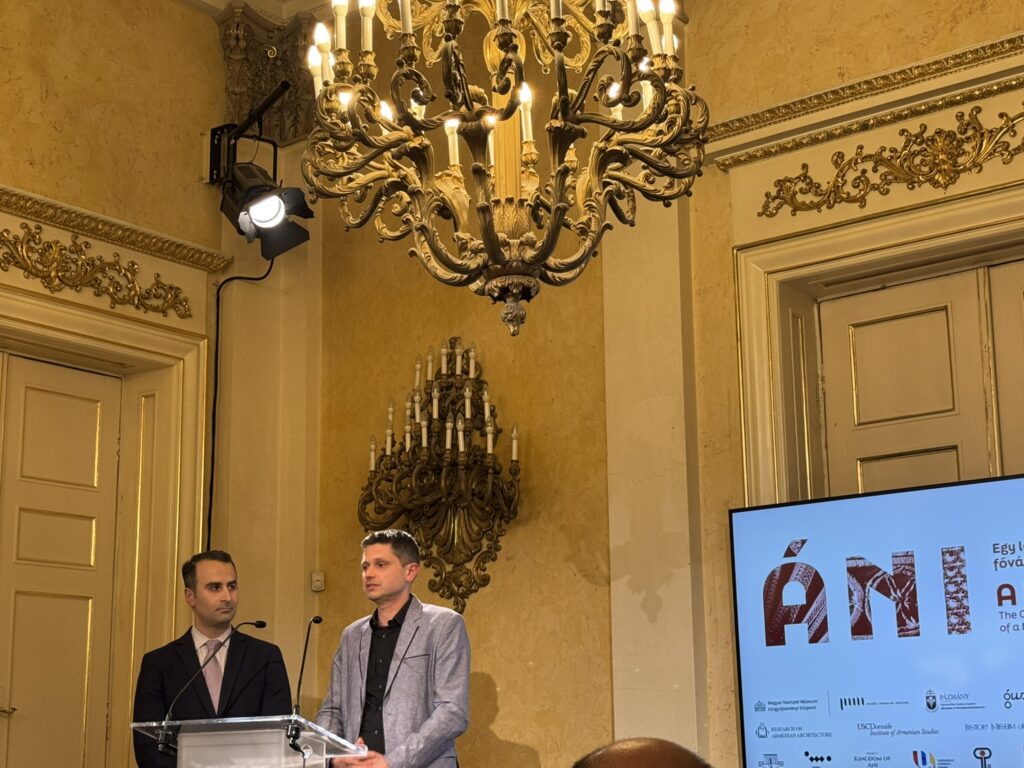
The next day, the first session of the conference, titled “The Ruins of Ani as a Nexus of Early-Modern/Modern Social Relations,” brought together scholars who approached Ani through the lens of memory, representation, and its transformation into an archaeological and cultural site. Peter S. Cowe, Distinguished Professor and Narekatsi Chair of Armenian Studies at the University of Southern California, opened the session by exploring the changing image of Ani as a cultural and historical symbol across centuries. The presentations explored the many ways in which Ani has been remembered and reinterpreted across different historical and cultural contexts. Davit Poghosyan, Director of the History Museum of Armenia, focused on the early stages of archaeological and museological engagement with Ani, discussing institutions such as the Hnadaran and Qaredaran museums and their role in preserving and shaping knowledge about the medieval city. Kristine Baghdasaryan, PhD student at Free University of Berlin and Pázmány Péter Catholic University, examined caricatures of Ani’s ruins published in the Armenian satirical periodical Khatabala in Tiflis (Tbilisi), several examples of which were included in the exhibition. Meanwhile, Lenka Panušková, Research Fellow at the Leibniz Institute for the History and Culture of Eastern Europe (GWZO) in Leipzig, analyzed the photographic documentation of Ani and the Caucasus by the Czech traveler Jaroslav Tkadlec (1851–1927), whose 1894 photographs, also displayed in the exhibition, captured the site between aesthetic representation and documentary record. Taken together, the presentations demonstrated how Ani’s memory has continuously been shaped through artistic, scholarly, archaeological, and visual practices, contributing to its enduring significance not only as an archaeological site, but also as a highly generative cultural symbol.
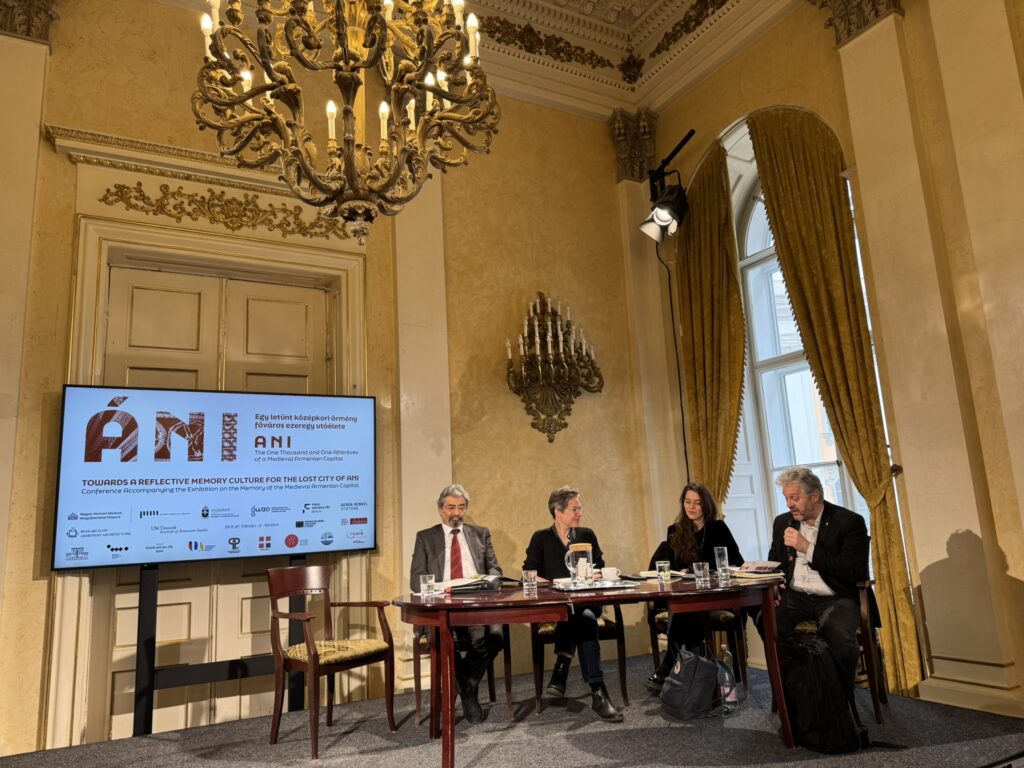
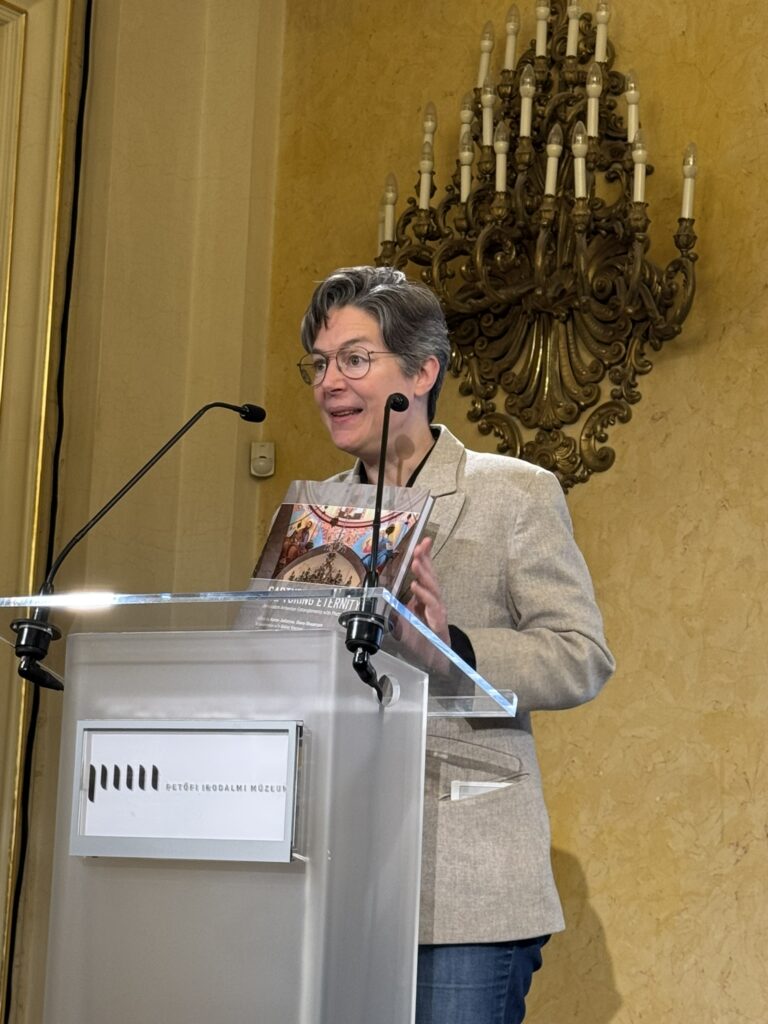
The second session of the conference, titled “Artistic, Civil Society Relations with Ani within and beyond Turkey” began with Elke Hartmann emphasizing the need for new approaches within Ottoman studies that incorporate the histories and perspectives of the Empire’s subject populations, framing Ani within broader debates on memory, denial, and historiography. Jasmin İhraç reflected on her artistic and embodied engagement with Ani, discussing how choreography can serve as a medium for sensing and interpreting the landscape of ruins. Vedat Akçayöz, President of the Kars Culture and Art Association, shared his long-standing personal engagement with Ani, presenting his extensive photographic work documenting the site, including its extensive caves, through which he has sought to preserve and transmit the city’s history and memory.
The third session, titled “Pilgrimages to the Ruins of Ani,” focused on personal, collective, and diasporic encounters with the site. Marc Mamigonian, Director of Academic Affairs at the National Association for Armenian Studies and Research (NAASR), Boston, presented the organization’s initiatives since the 1960s aimed at facilitating visits of Armenian diaspora members to Ani, highlighting the role of such programs in connecting communities with their historical heritage. Norair Chahinian, a Brasilian-Armenian architect and photographer based in São Paulo, offered a deeply personal reflection on his engagement with Ani and the wider region of Eastern Turkey/Historic Armenia, where he has spent several years documenting former Armenian settlements through photography; a selection of his works was also featured in the exhibition. Konrad Siekierski, Research Fellow at FU Berlin contributed with an analytical perspective on Ani as an affective place, emphasizing the emotional and experiential dimensions that shape how individuals and communities relate to the ruins. The day concluded with the screening of The Hidden Map (2021), directed by Ani Hovannisian Kevorkian, a filmmaker and broadcast journalist based in Los Angeles. The film follows Hovannisian and Scottish explorer Steven Sim as they travel through Eastern Turkey in search of the houses and villages of her ancestors, tracing personal and historical layers of the Armenian presence in the region. The screening was followed by a discussion with the audience, moderated by Anatolii Tokmantcev (Budapest), Assistant Professor at Pázmány Péter Catholic University, who offered reflections on the film and initiated a discussion on Steven Sim’s role within the documentary’s narrative.
The second and final day of the conference began with the session “Literature and Ruins.” Armenuhi Drost-Abgarian, Professor Emerita and former Director of the Mesrop Centre for Armenian Studies at Martin Luther University Halle-Wittenberg, offered a diachronic overview of Ani as a literary site of memory in medieval Armenian sources. Particular attention was given to references to the city in colophons, as well as to a lamentation text preserved in the writings of Aristakēs Lastivertc‘i concerning the loss of Ani. Emilio Bonfiglio, Research Fellow in the ERC project DeLiCaTe at the University of Hamburg, delivered a presentation on an Armenian manuscript produced in Ani with references to the work of John Chrysostom, the 4th-century Christian theologian and archbishop of Constantinople, discussing the circumstances of its production, including the possible patrons behind the work.
Bálint Kovács then examined themes of nostalgia and lost landscapes in the travel writings of Mekhitarist Father Minas Bžškeanc‘, particularly his work Journey to Poland, approaching it through the concept of “reflective nostalgia” derived from the work of Svetlana Boym. Karen Jallatyan approached representations of Ani in modern Armenian literature, drawing on both Western and Eastern Armenian literary traditions, particularly Levon Shant’s Shghtʿaywadzě։ Khagh mer Michnatarēn (The Shackled: A Play from Our Middle Ages) (1918/1921) and Krikor Beledian’s essay Hraparakner (Public Squares) (Ari Literature Foundation, Yerevan, 2021), focusing on how literary imagination continues to reshape the memory of the ruined city in national and diasporic settings.
The rich architectural and art historical heritage of Ani was the focus of the subsequent session. Sipana Tchakerian, Research Fellow at the Institut national d’histoire de l’art (INHA) in Paris, examined the documentation of Ani through the fieldwork and archival legacy of Nicole and Jean-Michel Thierry. László Daragó, Assistant Professor at the Budapest University of Technology and Economics, presented on the Armenian legacy in the work of Tamás Guzsik. Christina Maranci, Mashtots Professor of Armenian Studies at Harvard University, offered an in-depth analysis of the façades of the Cathedral of Ani, while Zaruhi Hakobyan, Associate Professor at the State Academy of Fine Arts of Armenia in Yerevan, explored the iconography and artistic conception of the tympanum sculpture of the Church of Eznka near Ani. The conference continued with a roundtable discussion featuring the creative team behind the video game Kingdom of Ani, including Zaruhi Santrosyan, Sona Babayan, and Armen M. Garikian. Representing a younger generation of creators, the team presented their project as an innovative approach to engaging with the memory of Ani, demonstrating how digital media and interactive technologies can help reimagine and preserve historical heritage. The creators emphasized that the game combines historical research with artificial intelligence, drawing on historical data, scholarly works, and medieval Armenian sources, including the writings of Aristakes Lastivertsi, in order to reconstruct the atmosphere and major events surrounding the fall of Ani based on historical evidence. To conclude, the conference and exhibition demonstrated that Ani continues to exist far beyond its physical ruins and geographical location. The gathering in Budapest of academics, photographers, artists, and individuals connected to the city through personal, cultural, or ancestral ties reflected the enduring relevance of Ani as a site of memory, imagination, and scholarly engagement. After centuries of being abandoned, Ani remains not only an object of historical inquiry, but also a living cultural crucible continuously reinterpreted through research, art, literature, and digital media across different parts of the world.
Dianna Mlhamyan
Master’s Student
Pázmány Péter Catholic University Department of Armenian Studies
June 2026